









- One sided adhesive tapes
- Packing tapes
- Coloured - marking tapes
- Electrical tapes
- Office tapes, adhesive tapes
- Slick surface tapes
- Metal adhesive tapes
- Masking crepe tape
- Masking special tapes
- Surface protection tapes
- Foam - sealing tapes
- Anti-slip tapes
- Self-adhesive rubber cut-outs
- Special tapes
- Textile tapes
- Warning and reflective tapes
- Double-sided adhesive tapes
- Electrical insulation material
- Glues
- Flexible stoppers, bumpers
- Velcro straps
- Primers - activators - cleaners
- Accessories for adhesives, applicators
What is the purpose of laminating documents?
When meeting an unfamiliar person for the first time, or even when visiting a new website, we notice the overall appearance and then form an overall impression of that person or entity based on it. So it is not worth underestimating the first impression. And it is no different with documents. There is a difference between presenting outwardly documents with a professional appearance and documents that look as if they have passed through dozens of hands.
Laminating documents will, of course, ensure that prints look perfect under all circumstances. Lamination, however, also has its justification even if you do not use text or graphic printouts when presenting your company during meetings with important business partners. The use of laminated documents is truly diverse, but before we get to specific examples, let’s explain what lamination actually is and why you should consider laminating documents.

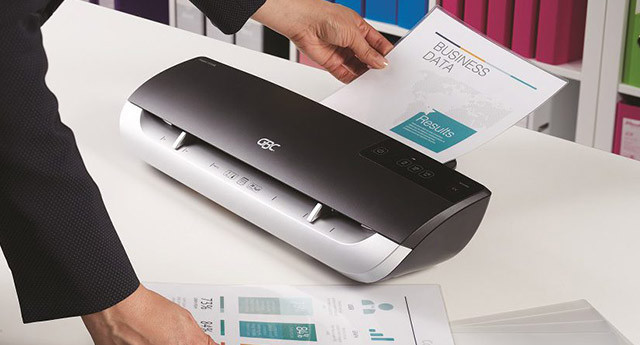
What is document lamination
Don't worry, it's nothing complicated.
Document lamination is essentially the simple sealing or bonding of documents or photographs into a thin transparent film. A laminating machine will do it for you, using rollers and film to create a perfect document. Document lamination is always double-sided, so during this process the film is placed both under and over the document.Document forging can generally be carried out either hot or cold. In the first case, the temperature during sealing is somewhere around 110 °C, and when passing through the rollers, compression occurs with a force of several tons. Special films of varying thickness are used for lamination. Depending on the intensity of the laminated document's "wear and tear," you can choose films with a thickness ranging from 80 to 250 microns, while the basic rule applies that the thicker the film, the more durable it is.
When hot laminating, it is recommended to use high-quality ink cartridges or toners, which guarantee that the color shades will not change during thermal processing. Hot lamination can be used with office paper starting from a weight of 90 g/m2, as well as standard photo paper, but be careful with papers that have a special texture, as they are not suitable for lamination. Cold lamination generally uses films containing an adhesive compound that, when passed through a laminating machine, ensures the perfect sealing of documents.
Why choose lamination
The reasons for laminating documents are simple.
Lamination significantly increases the durability of documents against wear and tear, so laminated documents will be resistant not only to abrasion, dust, or liquids, but will also withstand scratching or scribbling and will gain incomparably greater strength and mechanical resistance.You won’t tear or damage laminated documents even with rough handling. But that's not all. As we mentioned above, lamination adds quality and a professional appearance to documents. Lamination enhances colors, emphasizes contrast, and gives documents style. However, another important aspect of lamination also deserves attention, this time concerning photographs in particular. A common problem with photographs exposed to sunlight is color fading. With laminated photographs, there is no such risk, and even after long-term exposure to direct sunlight, the photographs do not lose the fidelity of their colors.
TIP: Do you know how to choose photo paper for a printer?
Specific examples of lamination
Laminating documents offers almost unlimited possibilities in all spheres of our lives. You can therefore use it in the office and at home, at school or in offices. There are no limits to imagination, but to inspire you, we’ll still conclude by offering a few tips on where lamination can be used. Lamination has proven effective in protecting and enhancing the appearance:
- photographs, school projects, and children’s drawings,
- official documents, diplomas, or certificates,
- presentations and lectures,
- graphs, tables, technical descriptions,
- seating arrangements, name tags, brochures, safety guidelines,
- menus, signs, and even posters.
Creativity certainly does not end there. If you know any interesting "tips and tricks" related to laminating, we would be happy if you shared them with us.